

Set within a cluster of traditional brick buildings, this garden feels quietly assured — a composition of form, texture and rhythm, grounded in its architectural context. We were appointed to carry out a comprehensive landscape build that would unify multiple courtyards, terraces and planted zones into a cohesive whole, blending old and new with care and clarity.
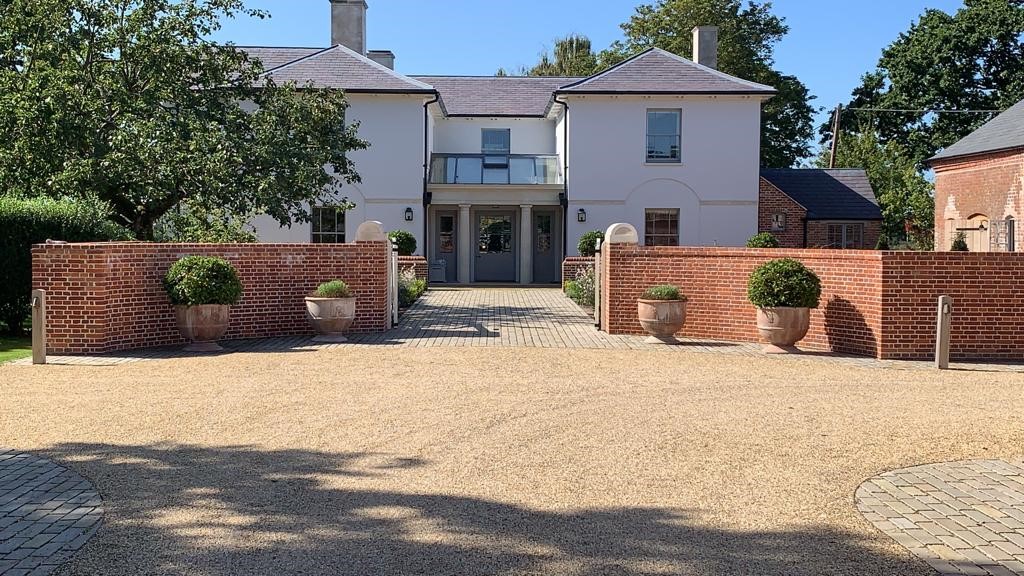
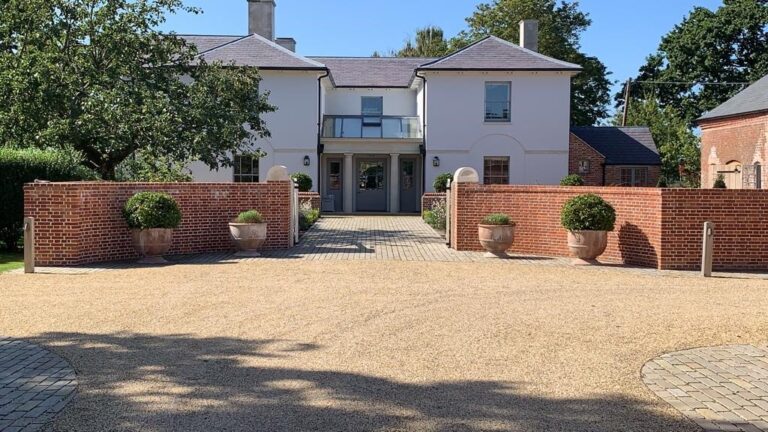
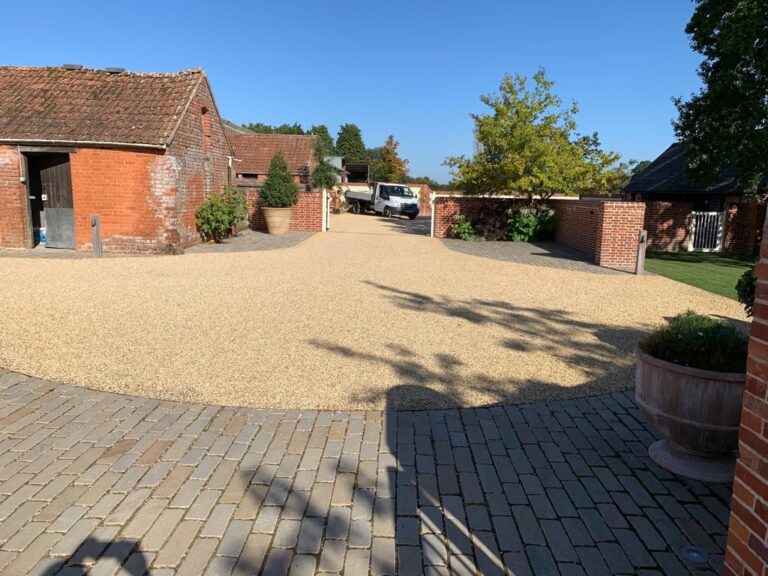
Approaching the property, a broad forecourt of loose golden gravel sweeps gently between red brick walls and mature trees. The gravel, laid over a well-prepared sub-base, gives a natural crunch underfoot and settles softly into the rural character of the site. Its informal texture is offset by crisply defined edges — clay pavers and stone setts used to maintain clean lines between drive, path and planting.
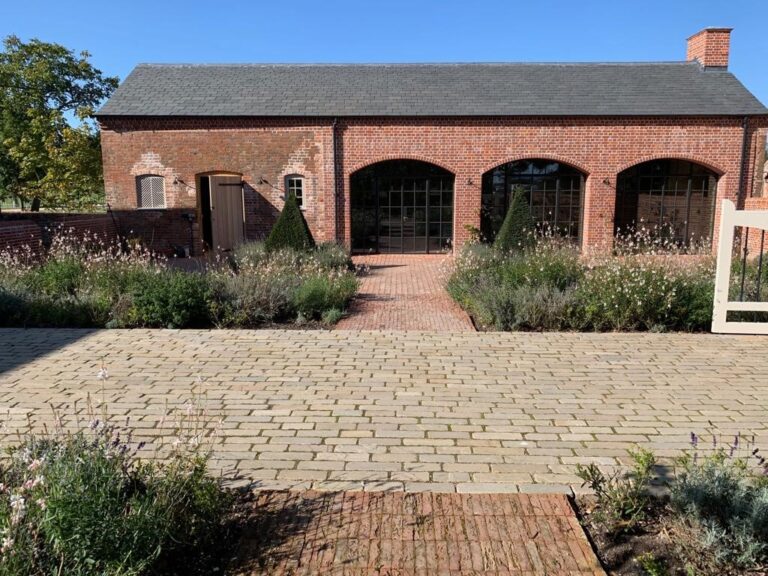
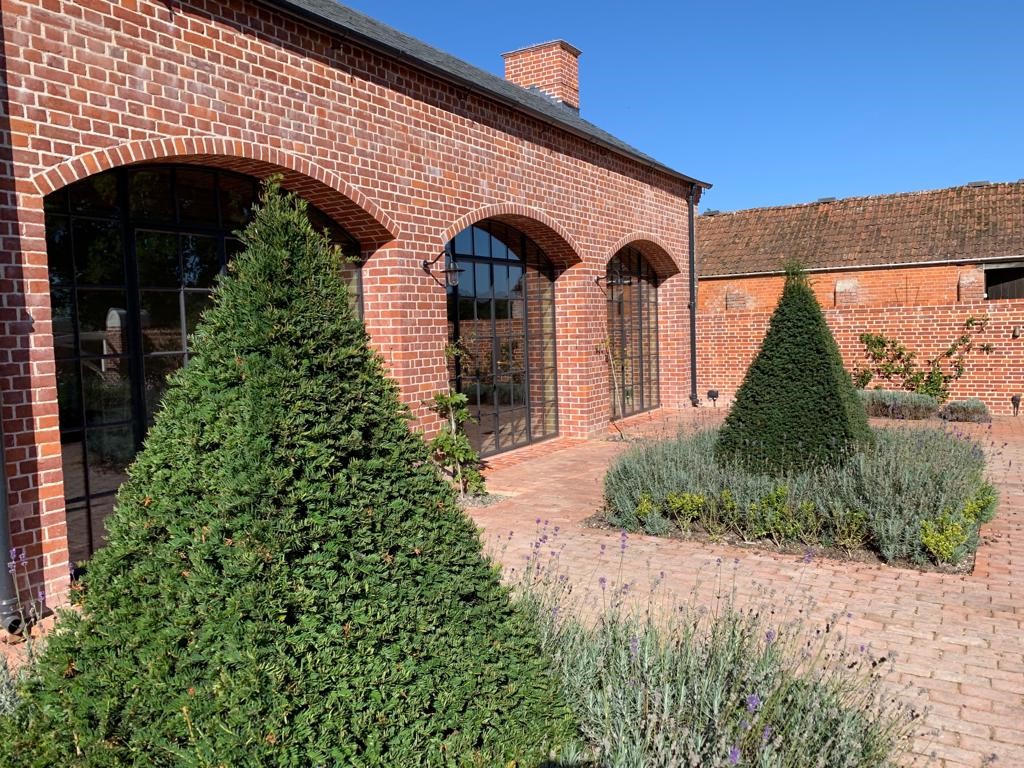
Beyond the gates, the entrance sequence unfolds through paved walkways and axial views. A central path in traditional clay brick, softened by borders of lavender and gaura, draws visitors toward the formal arches of the main building. On either side, clipped yew pyramids provide punctuation and structure, standing confidently against the soft brick façades and generous glazing.
The language of materials throughout is carefully restrained. Tumbled clay bricks, lime mortar, buff sandstone and fine gravel all sit comfortably against the red brickwork of the house and outbuildings. Each surface was laid with precision — paths in tight bond, terraces in stretcher courses, curves set out by hand to ensure perfect alignment. Where paths meet planted beds, the joints are softened and the lines begin to loosen, allowing a gentle shift from structure to softness.
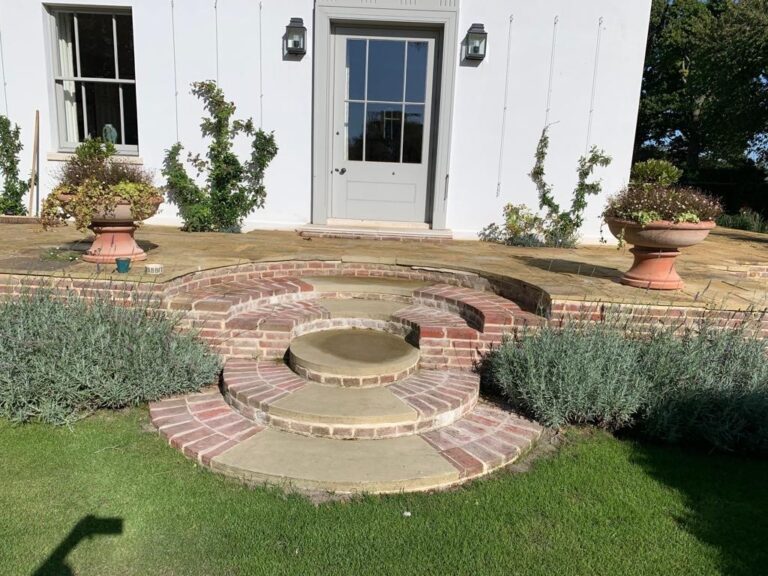
One of the key features of the rear garden is a circular sandstone step arrangement — built using radial-cut treads and bullnosed edges, enclosed by brick risers that echo the tones of the main house. The steps extend from a raised terrace, sweeping down to a lawn flanked by lavender borders. The geometry is classical but not rigid — a space designed to feel both composed and welcoming.
Planting throughout the site was developed to reinforce structure while softening transitions. Formal hedging and topiary anchor the design, while perennials and herbs bring texture, scent and movement. Beds were prepared with attention to soil structure and long-term health, allowing planting to settle quickly into its framework. Mature trees were retained where possible, offering scale and shade, while new specimens were introduced with care to maintain rhythm and enclosure.
Throughout the garden, lighting was integrated discreetly. Low bollard lights mark thresholds, while subtle uplighting to key trees and topiary ensures the space retains its structure into the evening. The result is atmospheric and legible — a garden that continues to perform long after sunset.
This project was about balance — of formality and softness, permanence and lightness, heritage and precision. Every line was set with intention; every junction handled with quiet confidence. The result is a garden that feels both enduring and entirely at ease — a refined, welcoming landscape that respects its setting while quietly elevating it.