

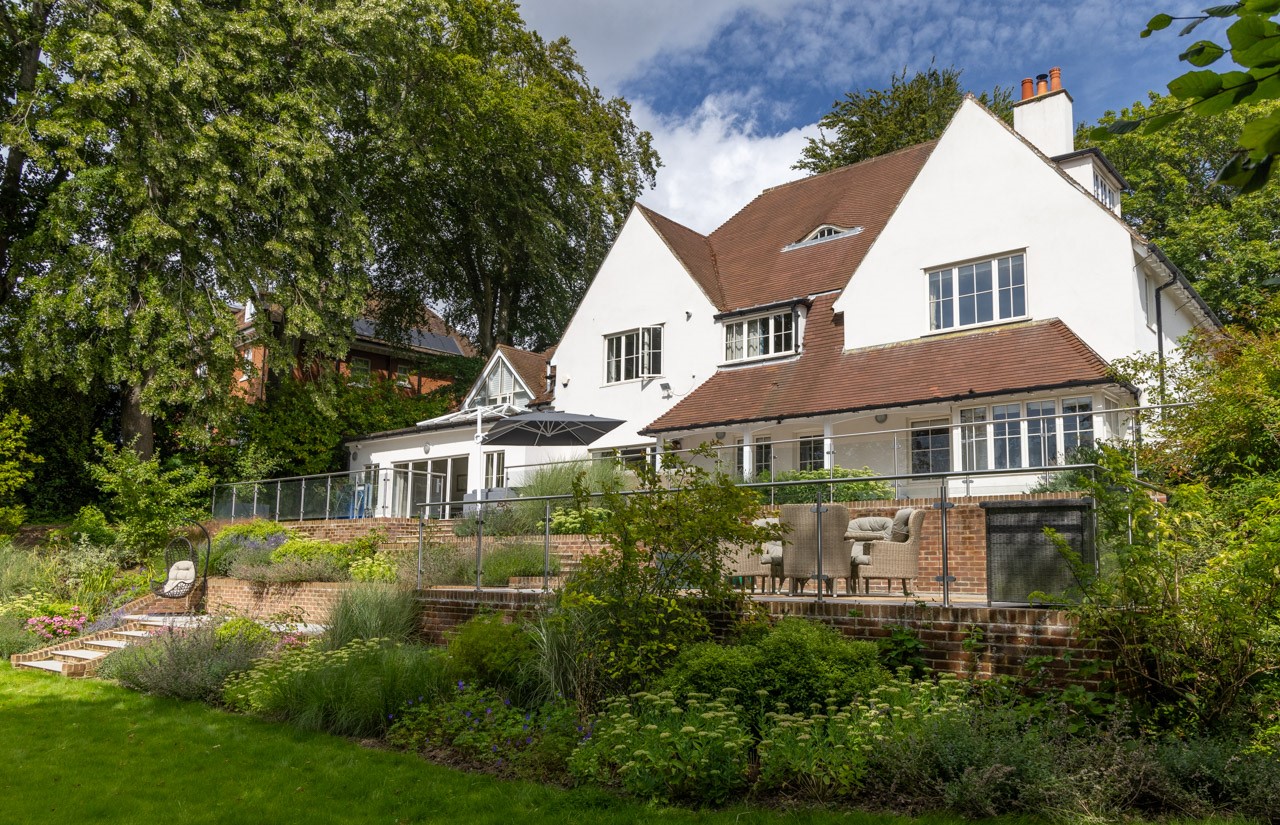
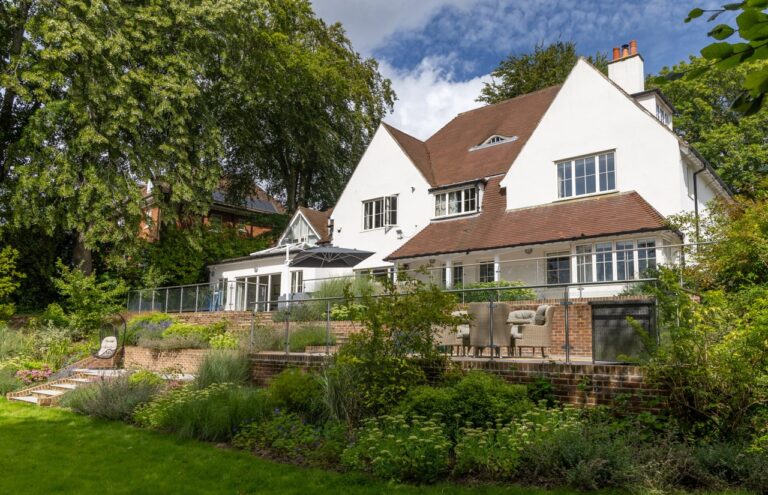
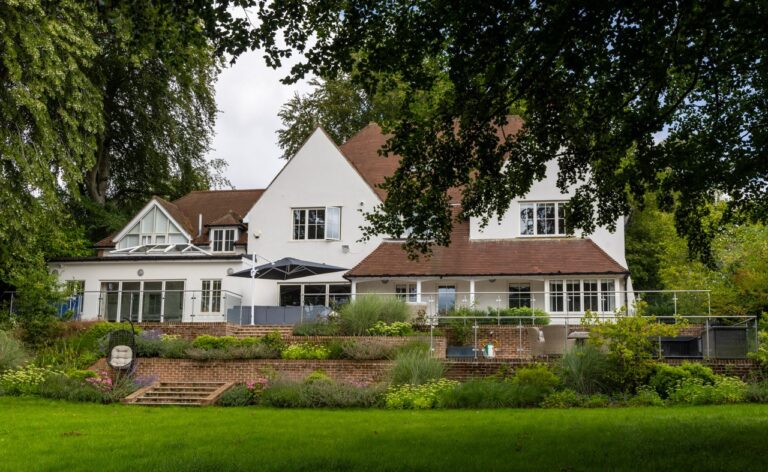
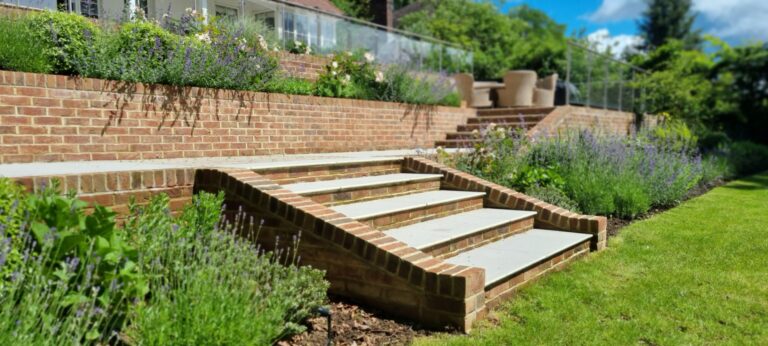
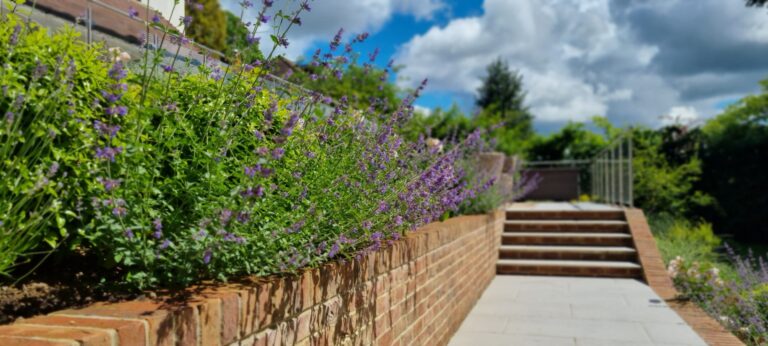
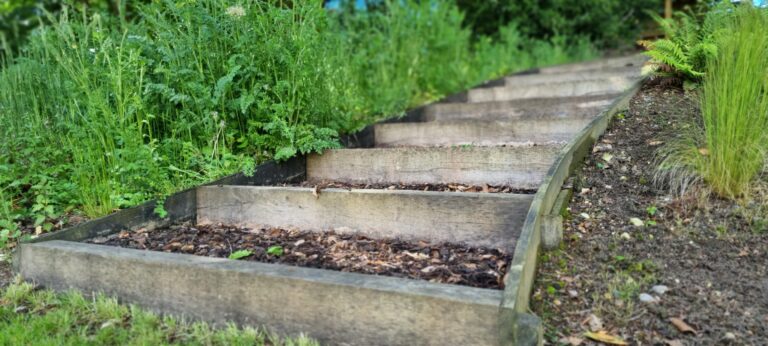
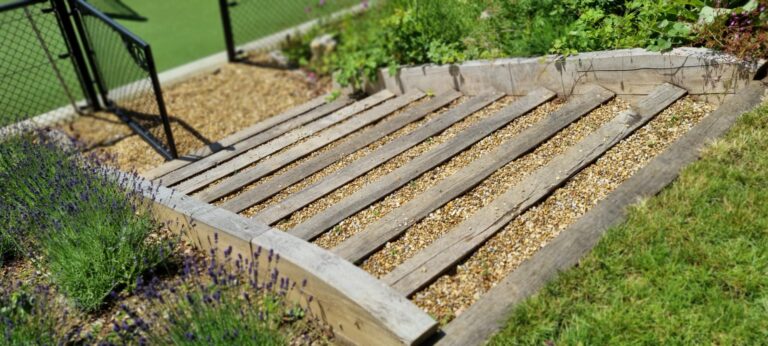
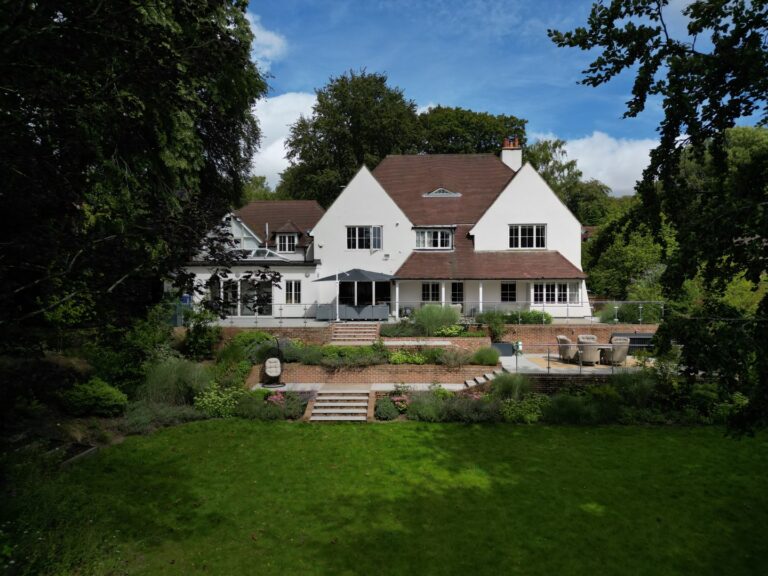
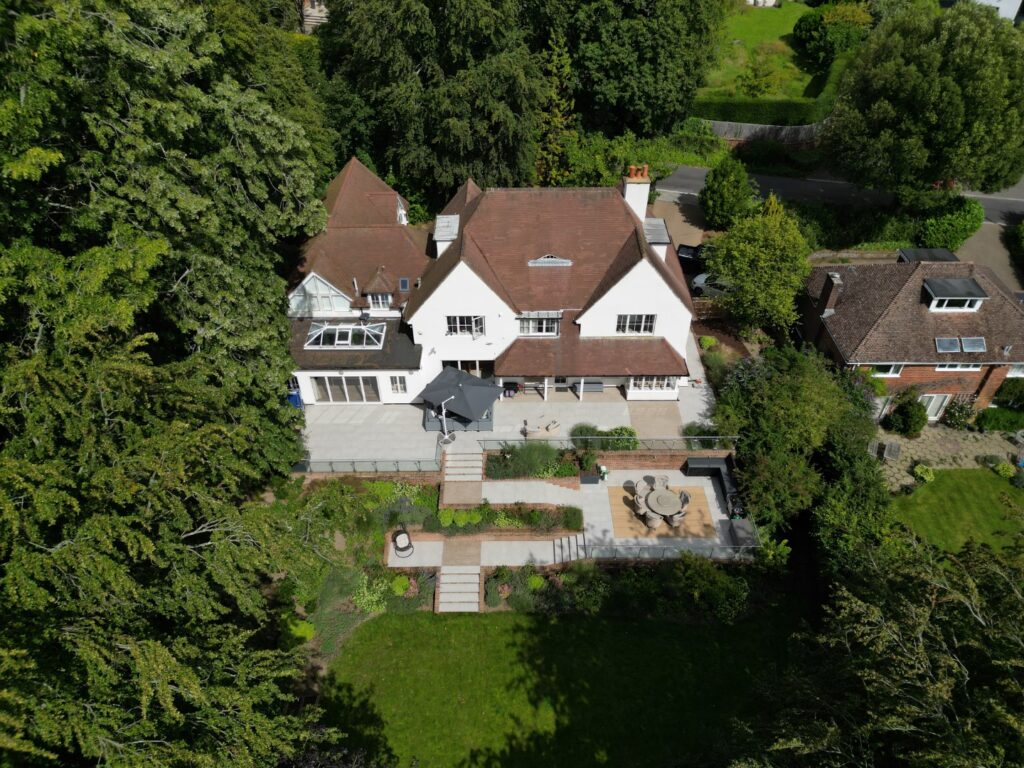
Perched high above the city of Winchester, this garden is both an architectural extension of the house and a richly planted, immersive outdoor space. Carved into a sloping site on the prestigious Sleepers Hill, the design called for exacting precision — a series of terraces, steps and platforms set out to balance engineering with elegance. We were appointed to carry out the full landscape construction, working closely to deliver a garden that feels grounded, generous and deeply considered.
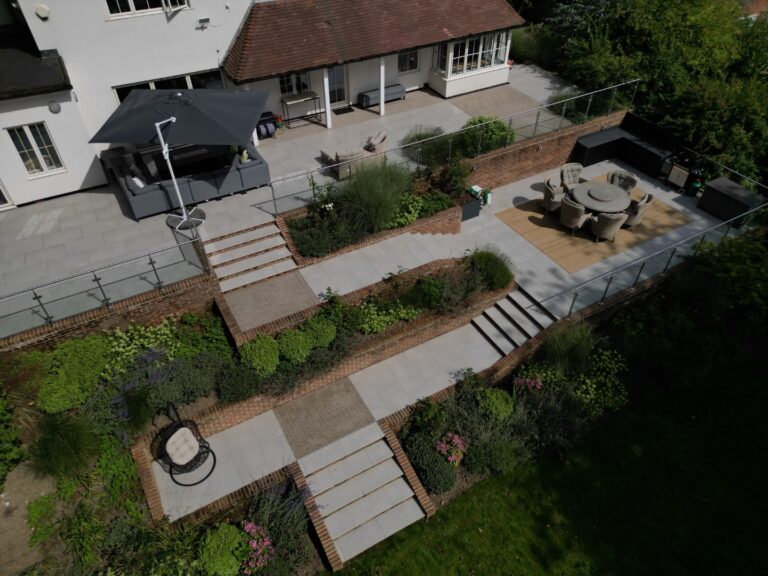
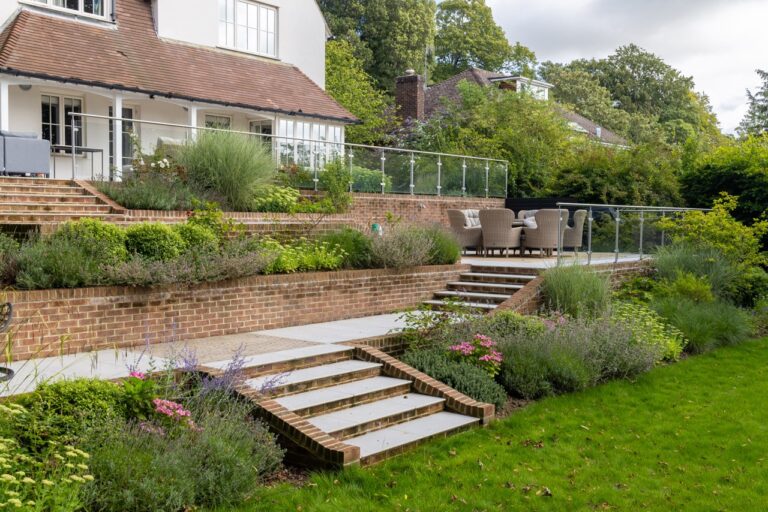
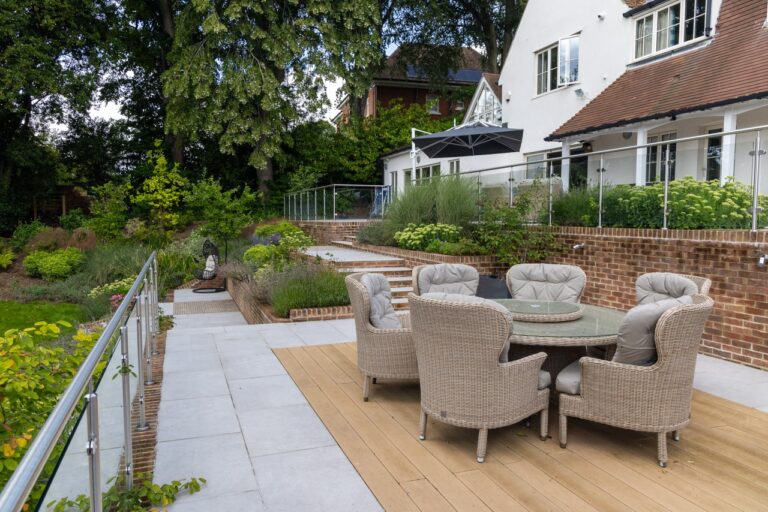
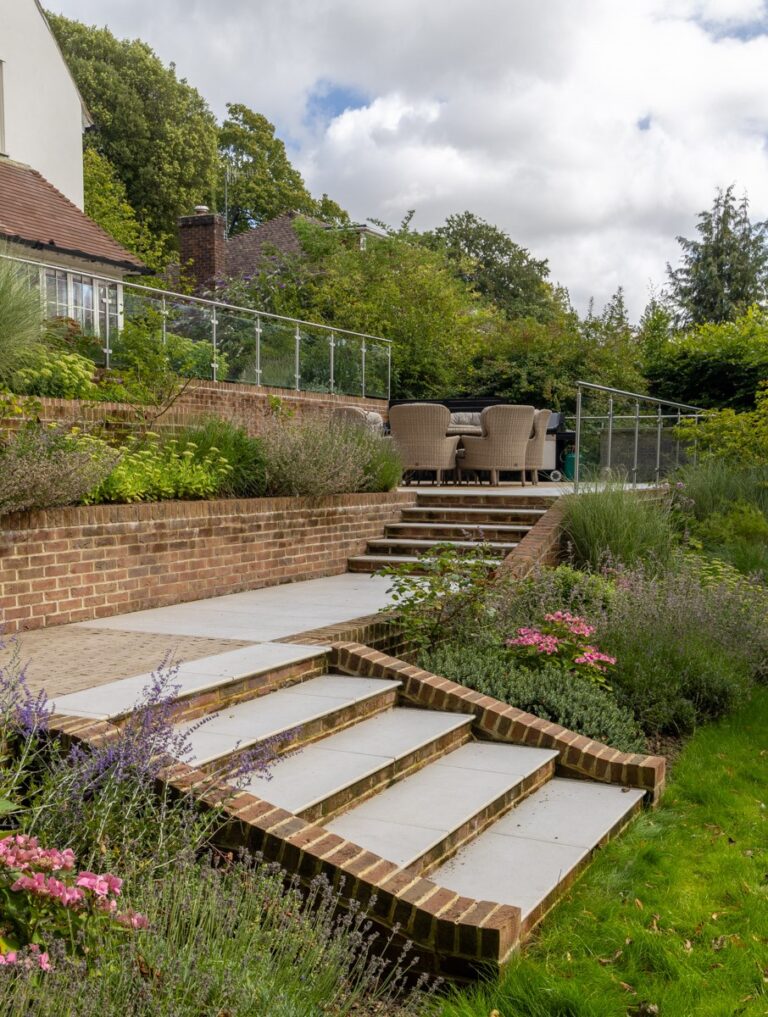
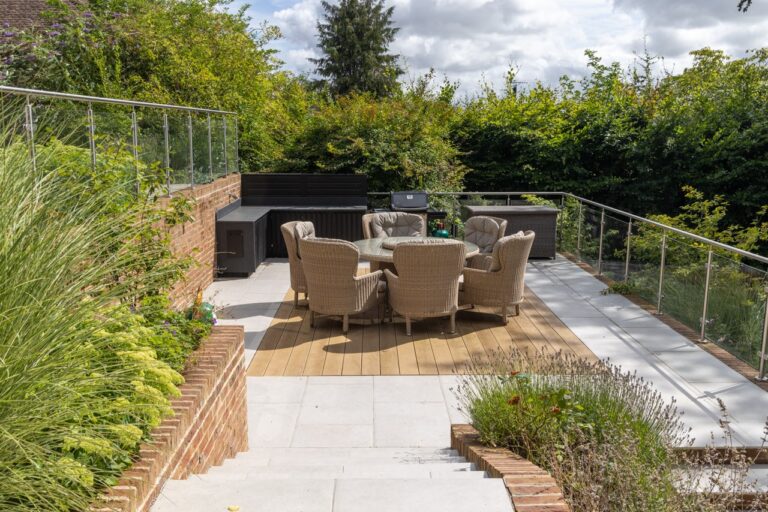
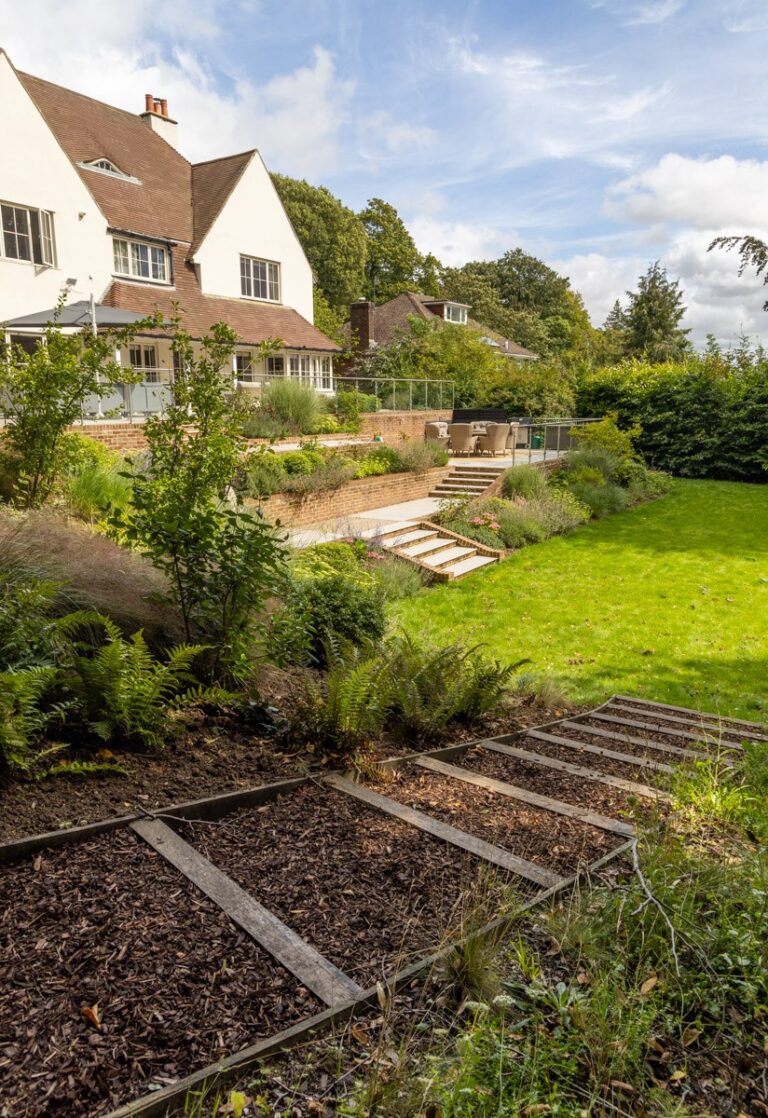
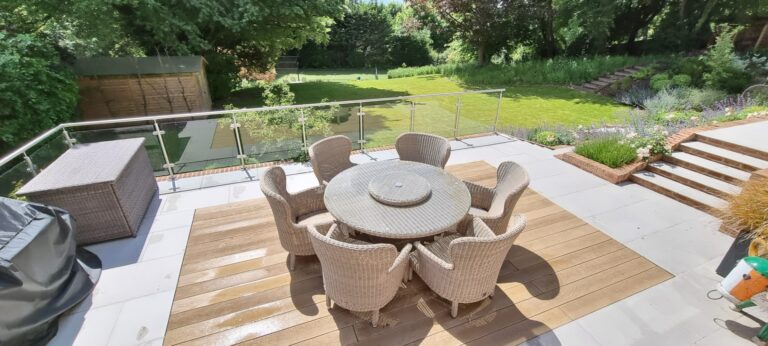
At the rear, the garden is structured across three primary levels, each defined by porcelain-paved terraces and carefully placed steps. The upper terrace connects directly to the house, its paving aligned to internal thresholds and set out with crisp, stretcher-jointed lines. Wide porcelain steps lead down to the middle deck, which houses a bespoke outdoor kitchen framed in black-stained timber. The kitchen is built into a retaining wall and designed with clean linearity — practical, architectural, and in harmony with the wider scheme.
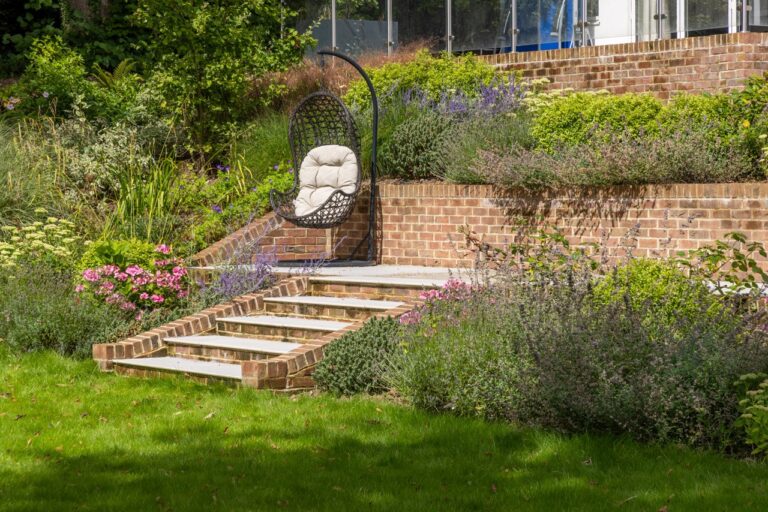
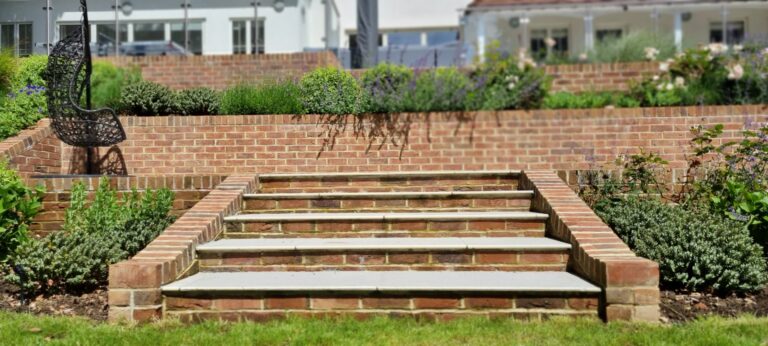
Below this, a final series of steps descends to the lower lawn. Along the way, raised planting beds and sloped borders soften the geometry, providing texture, colour and movement. The steps — detailed with porcelain treads and bullnosed edges — are centred precisely on doors and sightlines, their layout aligning across multiple axes to tie the garden seamlessly back to the architecture.
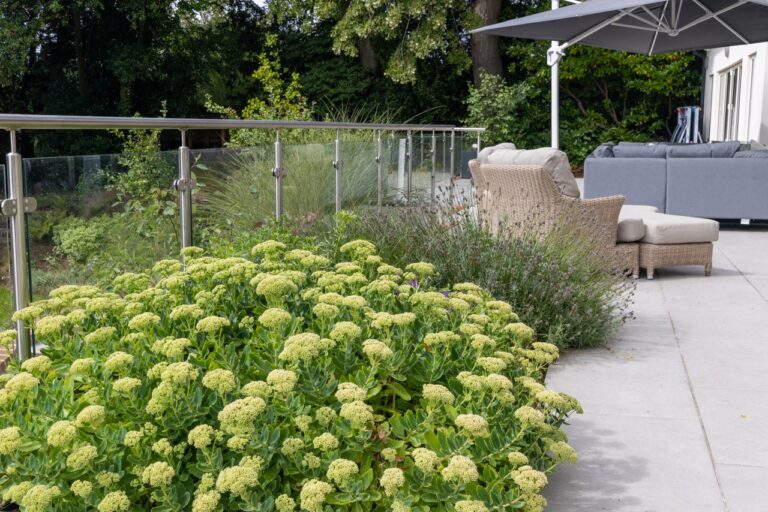
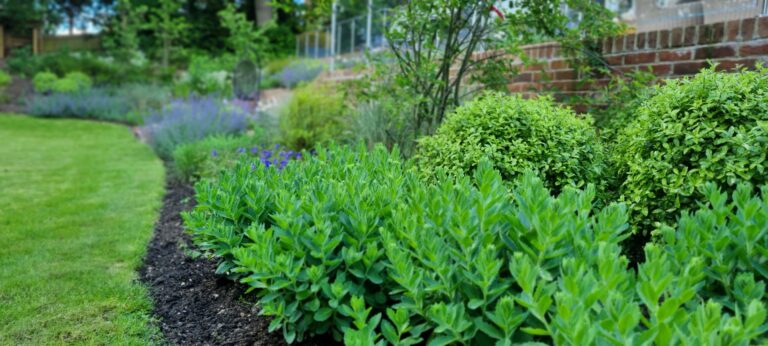
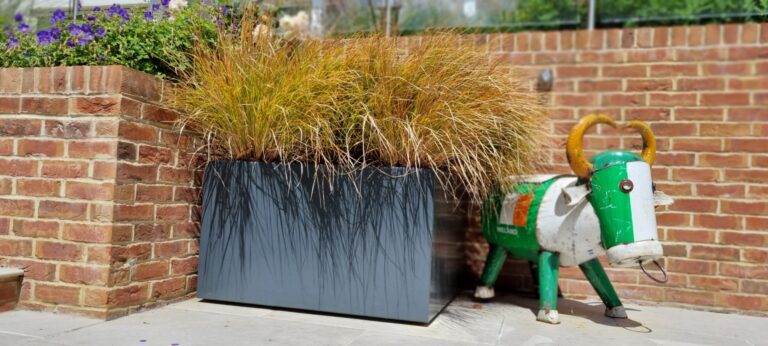
In contrast to the sleekness of the terraces, the boundary is held by mature planting and sculpted earthworks. Beech and yew hedging form the structural bones, while a naturalistic mix of perennials, ferns, and grasses bring softness to the transitions between levels. Alkaline soil and light topography informed the planting palette, which was layered to provide seasonal rhythm and a gently immersive feel.
Lighting was integrated throughout with subtlety and care. Stainless steel step lights illuminate the vertical planes, while spike-mounted uplighters reveal specimen trees and mature structural planting after dark. Wall-mounted fixtures were used sparingly — focused on architectural accents and sheltered dining areas. The lighting strategy supports both function and atmosphere, creating a garden that is as usable in the evening as it is expressive.
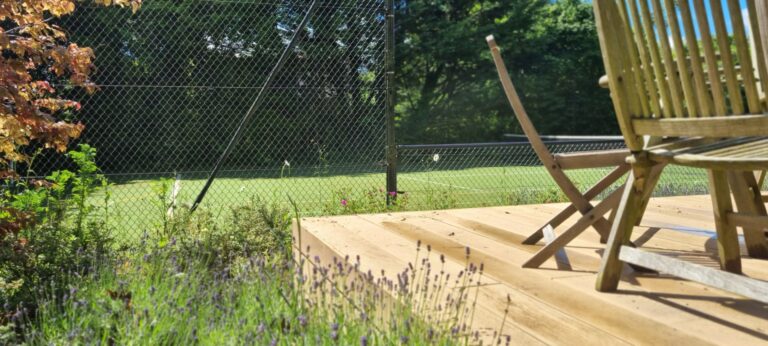
Materials were selected for their consistency and longevity. Florence Grey porcelain forms the main surface, chosen for its tone, texture, and durability. Brick paving in a subtle stone grey runs alongside key paths and thresholds, offering a shift in scale and pattern. Golden oak-effect composite decking was introduced to warm the palette on the middle terrace, bringing a soft counterpoint to the otherwise monochrome structure.
This was a project of technical challenge and spatial clarity — a garden that required careful coordination between design intent and on-site craft. Every level, line and junction was resolved with precision, allowing the finished space to feel calm, cohesive and grounded. From kitchen to canopy, terrace to tree, the garden now flows effortlessly — a quiet, sculpted space perched on the hillside, made for light, life and living.